

Spinal Stenosis Treatment Options: When Is Surgery the Best Choice?
Spinal stenosis often starts quietly. You may notice intermittent back or neck discomfort that seems manageable at first. Over time, those symptoms can evolve into leg pain with walking, numbness or tingling, a sense of heaviness or weakness, or even difficulty maintaining balance. What begins as a nuisance can gradually interfere with how you move through your day.
This progression creates a common point of uncertainty. Many patients try physical therapy, medications, or injections and see partial or temporary relief. When symptoms return or begin to limit walking, sleep, or daily activity, it becomes less clear whether to continue conservative care or consider a more definitive solution.
That leads to the central question: when does it make sense to continue treating spinal stenosis without surgery, and when does surgery offer the more reliable path to lasting relief and function?
What Is Spinal Stenosis?
Spinal stenosis refers to a narrowing of the spaces around the spinal cord or the nerves that travel through the spine. As that space becomes more limited, nearby nerves may become compressed, which can cause pain, numbness, weakness, or changes in balance and walking.
This condition most often affects the cervical spine (neck) or the lumbar spine (lower back), where both motion and load place ongoing stress on spinal structures over time.
Common causes include:
- Age-related degeneration of the spine
- Thickening of ligaments that line the spinal canal
- Disc bulging or collapse
- Arthritis affecting the facet joints
- Spinal instability or slippage (such as spondylolisthesis)
In many cases, these changes develop gradually. Not every structural change causes symptoms. However, when narrowing reaches a point where nerves are affected, symptoms tend to follow.
Common Symptoms That May Point to Spinal Stenosis
Spinal stenosis can present in several ways, depending on which nerves are affected and how much compression is present. Symptoms of spinal stenosis include:
- Numbness or tingling in the legs or arms
- Arm pain, numbness, or weakness when the cervical spine is involved
- Loss of fine motor control in the hands (for example, difficulty with buttons or handwriting) in cervical cases
- Leg pain with walking that improves with sitting or leaning forward (neurogenic claudication)
- Heaviness, fatigue, or weakness in the legs with prolonged standing or walking
- Balance problems or a sense of unsteadiness
- Back or neck discomfort is often present, but is not always the main driver of symptoms
These symptoms often develop gradually. Because the progression can be slow and intermittent, many patients delay evaluation until symptoms begin to interfere more consistently with daily activity. By that point, the prudent choice is to get an evaluation, even when symptoms feel manageable with greater effort.
Non-Surgical Spinal Stenosis Treatment Options
Many patients with mild spinal stenosis experience symptom relief with non-surgical care, especially in the earlier stages or when symptoms remain manageable. Non-surgical spinal stenosis treatments include:
- Physical therapy to improve core support, mobility, and posture
- Activity modification to reduce positions that worsen nerve compression
- Anti-inflammatory medications when appropriate
- Epidural steroid injections to reduce inflammation and provide temporary symptom relief
- Time and observation for milder or intermittent symptoms
Non-surgical treatment can be effective at reducing pain and improving function; however, it does not directly address the underlying narrowing around the nerves. When symptoms persist or progress despite these measures, it may be a sign that additional intervention is needed.
When Conservative Treatment May Be Enough for Spinal Stenosis
Conservative care can be appropriate when symptoms remain controlled and do not show signs of neurologic progression. For example, conservative treatment for spinal stenosis may be appropriate when:
- Symptoms are mild or intermittent rather than constant or escalating
- Daily function remains manageable, even if some activities require adjustment
- There is no progressive weakness or loss of neurologic function
- Pain improves with rest, position changes, or structured therapy
- Imaging findings are present, but remain stable
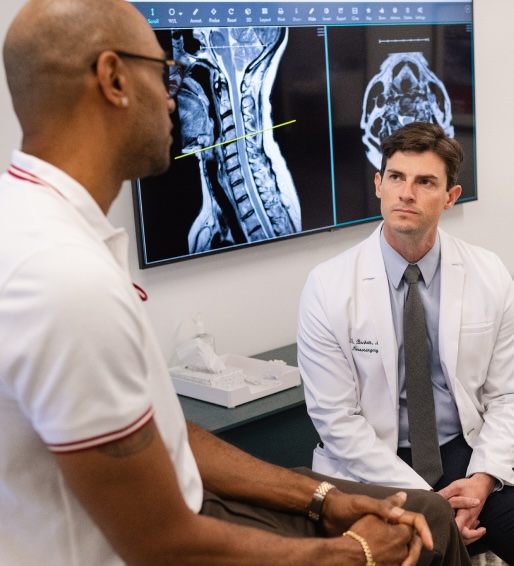
It is important to separate what appears on imaging from what you actually feel. Many patients have visible narrowing on MRI but maintain stable symptoms for long periods without surgery. As long as neurologic function remains intact and quality of life stays acceptable, a non-surgical approach can be both reasonable and appropriate.
Signs Spinal Stenosis Surgery May Be the Better Option
Surgery becomes worth serious consideration when symptoms move beyond inconvenience and begin to limit function in meaningful ways. When neurologic progression is present, the goal shifts from symptom management to relieving nerve compression and protecting long-term function. Signs that surgery may be the better option include:
- Pain that continues to limit walking, work, sleep, or normal daily activity
- Progressive numbness or weakness in the arms or legs
- Loss of balance or coordination, particularly with walking
- Symptoms that have not improved after a reasonable trial of non-surgical care
- Imaging that shows significant nerve compression consistent with the patient’s symptoms
At this stage, surgery is not about giving up on conservative care. It is a decision to address ongoing nerve compression directly, with the goal of restoring function and preventing further neurologic decline.
How Surgeons Decide Whether Spinal Stenosis Surgery Is Appropriate
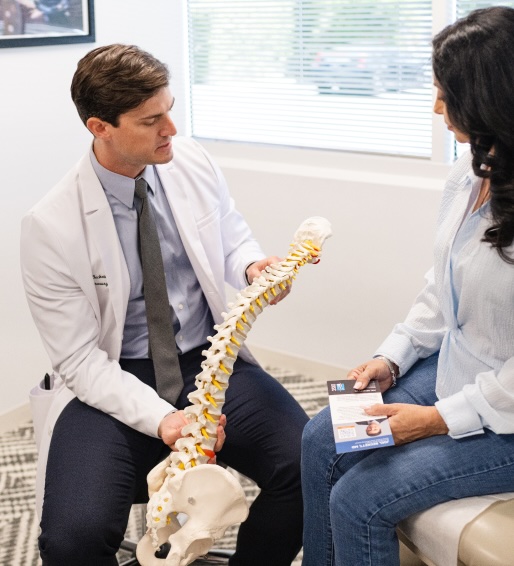
The decision to proceed with spinal stenosis surgery does not rely on a single finding. It reflects a combination of imaging, symptoms, physical examination, and how the condition affects your day-to-day function. The key question is not simply what the MRI shows, but whether surgery is likely to improve your specific symptoms and restore function in a meaningful way.
Dr. Beckett considers several factors, including:
- The severity of stenosis on imaging and how much space remains for the nerves
- Whether your symptoms match the level and pattern of nerve compression seen on imaging
- The duration of symptoms and whether they have remained stable, improved, or progressed
- Evidence of functional decline, such as reduced walking tolerance or loss of independence in daily activities
- The presence of spinal instability, deformity, or disease affecting multiple levels
- Your overall health, bone quality, and activity goals
These factors help determine not only whether surgery is appropriate, but also what type of procedure is most likely to achieve a durable result.
Surgical Treatment Options for Spinal Stenosis
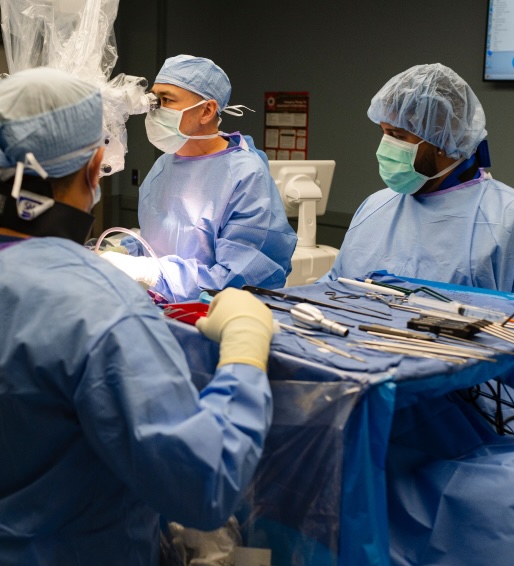
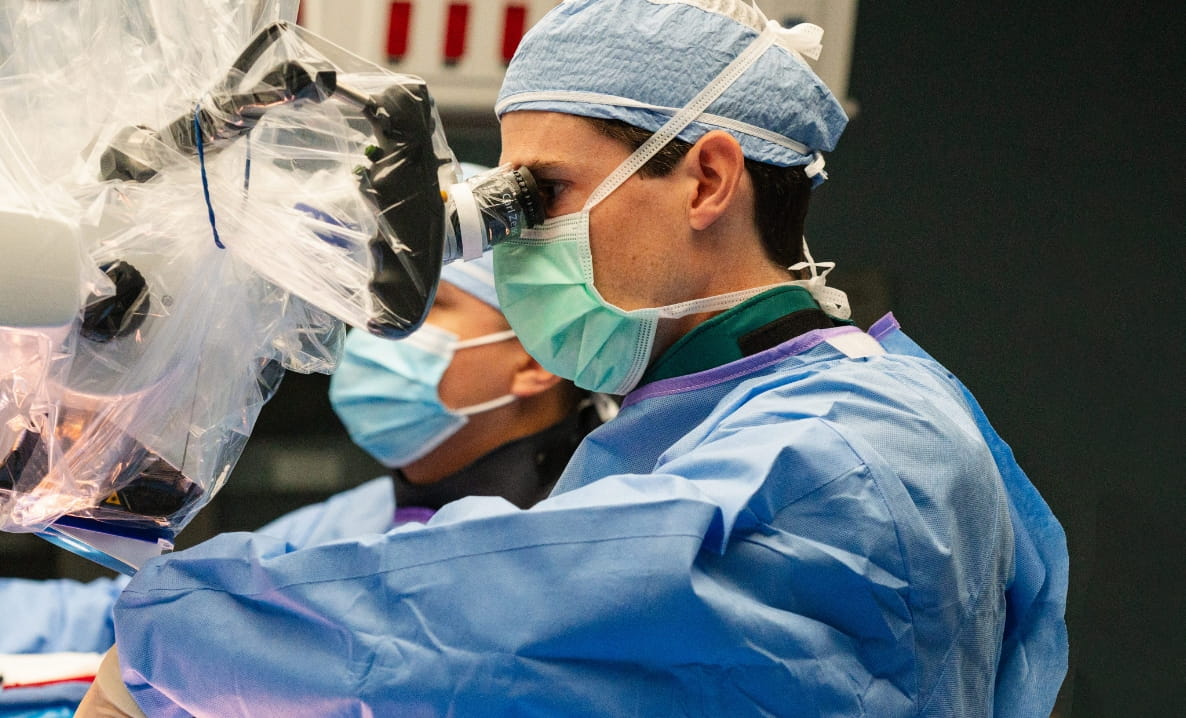
When surgery is appropriate, the goal is to relieve pressure on the nerves while preserving stability and function. Procedures are selected based on whether decompression alone is sufficient or whether the spine also needs stabilization.
- Decompression: Removal of bone, ligament, or disc material to relieve pressure on the spinal cord or nerve roots (e.g., laminectomy, laminotomy)
- Minimally Invasive Decompression: A muscle-sparing version of decompression performed through smaller incisions using specialized instruments
- Decompression with Fusion: Nerve decompression combined with stabilization when there is instability, deformity, or risk of postoperative instability (e.g., ACDF in the cervical spine, lumbar decompression with fusion)
No single procedure fits every patient. The choice depends on your anatomy, the location and severity of compression, and whether the spine requires stabilization alongside decompression. Dr. Beckett selects the approach most likely to achieve durable relief with the least disruption to surrounding structures.
What Recovery Depends On
Recovery after spinal stenosis surgery varies from patient to patient. Even when procedures appear similar, the pace and extent of healing depend on several key factors:
- The type of surgery performed; decompression alone typically allows for a faster recovery than procedures that include fusion
- The number of levels treated; multi-level surgery places greater demands on healing and endurance
- The severity and duration of nerve compression before surgery, which can affect how quickly nerves recover
- Overall health, conditioning, and factors such as smoking, diabetes, or bone quality
- Adherence to post-operative guidance, including walking, rehabilitation, and activity restrictions
Recovery is not defined by a fixed timeline. It reflects how these factors come together in your specific case.
The Best Treatment Is the One That Matches the Patient
Spinal stenosis does not follow a single script. Two patients with similar MRI findings can experience entirely different symptoms, functional limitations, and responses to treatment. What works well for one person may offer little benefit for another, which is why treatment decisions should never be based on imaging alone.
The right path forward depends on the full picture: how severe your symptoms are, how much your daily function has been affected, what the imaging shows, and what your long-term goals look like. Some patients manage well with physical therapy, activity modification, and periodic injections and never need to consider surgery. Others reach a point where conservative care has run its reasonable course and surgery offers the clearest opportunity to restore mobility and protect function over time.
If you are living with spinal stenosis and want to understand your options, schedule a consultation at Beckett NeuroSpine for a clear, individualized assessment and a treatment plan built around your symptoms, your imaging, and the life you want to get back to.